
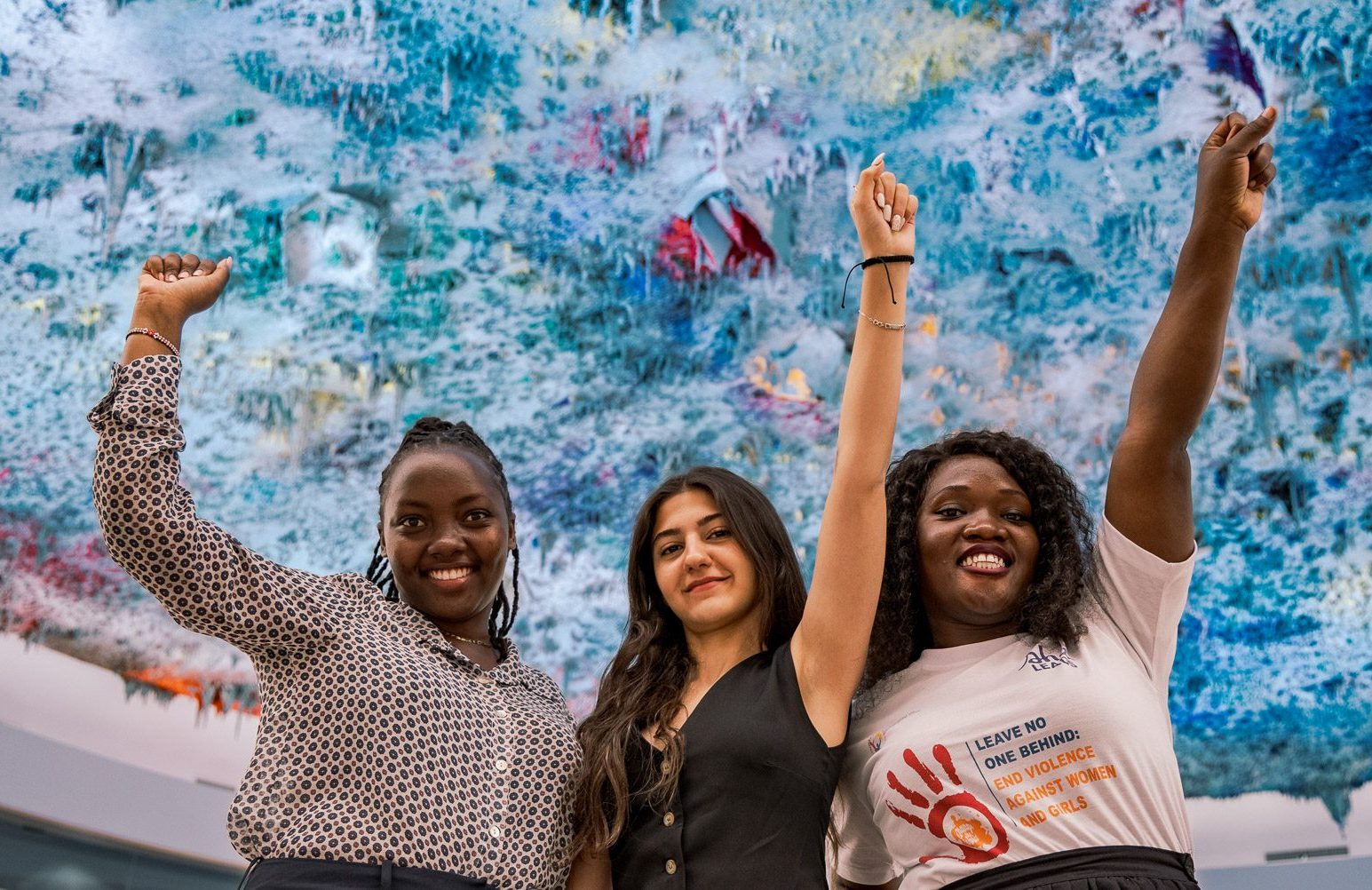

DCI works to ensure every girl’s rights are protected and every girl has the tools to reach her full potential.
In many countries, girls still face tremendous obstacles in realising their fundamental rights. They experience multiple forms of discrimination and violence throughout their life, starting even before birth and continuing throughout childhood and adolescence, through to adulthood.
DCI’s Strategic Framework identifies gender as a cross-cutting issue, embedding it across all four strategic priorities. The Framework requires that a gender perspective be mainstreamed into all DCI policies, in accordance with the principles enshrined in the Convention on the Rights of the Child and the Convention on the Elimination of all forms of Discrimination against Women (CEDAW). In 2019, DCI renewed our commitment to gender equality in our Code of Ethics and Gender Policy by establishing minimum standards that will guide DCI as a Movement in order to ensure equal participation and access to positions and resources for women and men at all levels of the organisation and to promote gender awareness and sensitivity.
DCI’s long-term objectives regarding gender equality are to ensure equal rights and opportunities for girls and young women by changing social norms, policies and practices, and to engage boys and men in achieving gender equality.


Our Work
Our Role
DCI advocates at all levels for the rights of girls and young women to be fulfilled and upheld. DCI works to:
- Empower children to become agents of change in mainstreaming gender equality in all their activities and endeavours, building a new generation of leadership
- Conduct capacity building workshops for girl human rights defenders
- Work for the protection and promotion of the rights of all children, with specific focus on girls and children with diverse gender identities
- Uphold girls’ rights through strategic litigation at the regional and/or international levels
- Respond to the most pressing challenges girls and young women face by providing free legal aid, psychosocial support and collecting disaggregated data through Socio-Legal Defence Centres
- Support and stand in solidarity with girls and feminist movements, support all their effort to build momentum to advance gender equality
- Renew calls for meaningful participation, resourcing and visibility for girls working in civil society
International Level
DCI advocates at the international level for the fulfilment of the human rights of girls and young women and works with UN Human Rights mechanisms and bodies in Geneva to affect global policy.
DCI works to influence resolutions at the Human Rights Council, particularly on the subjects of violence against women, discrimination against women, and female genital mutilation. DCI, particularly as a member of the civil society group on girls’ and young women’s rights, influences resolutions by meeting bilaterally with co-sponsor governments, sharing inputs, commenting on drafts, and attending negotiations.
National Level
DCI National Sections have developed programmes and projects mainstreaming a gender perspective, including those that fight gender-based violence (GBV) and empower girls to become advocates of their own human rights as well as the rights of others.
Projects in Focus
DCI-Lebanon
DCI-Lebanon’s Incredible Me programme
trained girls and women in psychosocial
support and mental health. Amid war and
displacement, participants have become
community focal points who support peers,
foster resilience, and promote healing
within their families and neighbourhoods.
DCI-Sierra Leone
DCI-Sierra Leone organises trainings to
promote the equal sharing of domestic
work between boys and girls, as well as
leadership empowerment of girls and
young women. Through this initiative, about 3,500
children and young people are trained annually in
domestic responsibilities and leadership
skills, helping to shift everyday gender
norms and expectations within households
and communities.
DCI-Ghana
At DCI-Ghana, the Girls and Young
Women advocacy groups present
recommendations at municipal dialogues,
stakeholder consultations, and assembly
meetings. This marks a major shift, where
confidence-building programmes are
showing meaningful impacts on girls’ and
young women’s participation. Increasingly,
local authorities are recognising them
as legitimate stakeholders in community
development.
She Leads Programme
In 2021, DCI joined the She Leads consortium, a five-year joint international programme with Defence for Children – ECPAT the Netherlands (DCI-ECPAT), African Women’s Development and Communication Network (FEMNET), and Terre des Hommes (TdH) Netherlands, in partnership with the Ministry of Foreign Affairs of the Netherlands.
The geographic focus of the programme is East Africa (Uganda, Ethiopia, Kenya), West Africa (Ghana, Mali, Sierra Leone, Liberia) and the Middle East (Lebanon, Jordan). In addition to the key work in these countries, the programme is implemented at regional and international levels, targeting regional institutions, international human rights mechanisms and other stakeholders, and facilitating GYW’s access to regional and international platforms.
The She Leads programme objective is to increase sustained influence of girls and young women on decision-making and the transformation of gender norms in formal and informal institutions.


